Finding reliable pest control service in Arlington means addressing the specific soil, architectural gaps, and humidity conditions unique to Tarrant County. Structural vulnerabilities like brick weep holes and pier-and-beam foundations allow subterranean termites, American roaches, and Norway rats to enter living spaces without proper perimeter barriers.
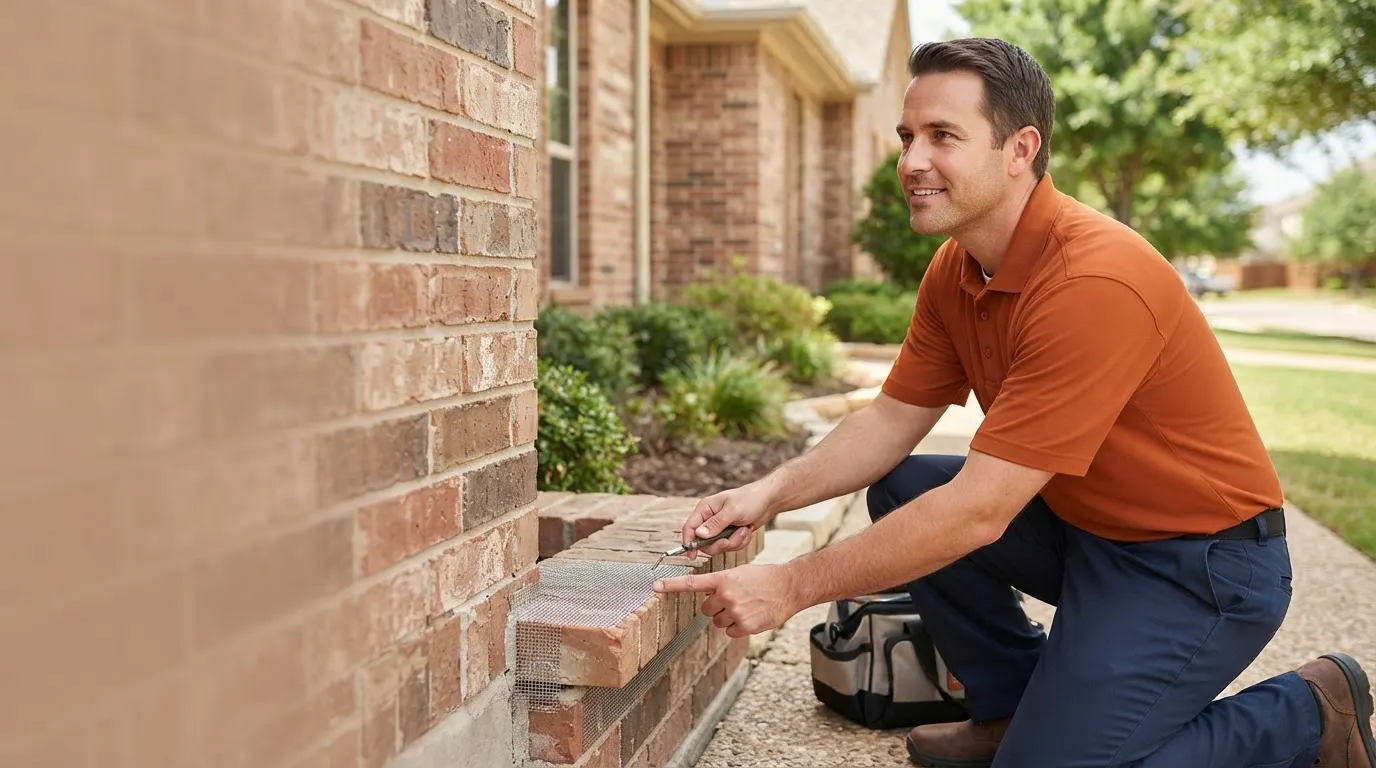
Pest Control Service in Arlington is a targeted architectural and environmental management practice that identifies, eliminates, and blocks invasive insects and rodents from entering residential and commercial structures.
Every service reflects the same meticulous attention to detail, whether it's a single job or a larger pest control service project across Arlington.
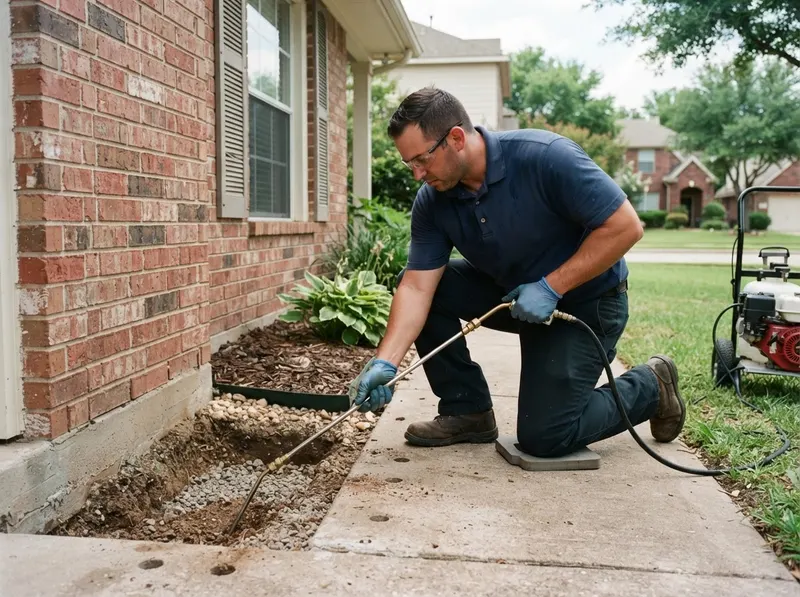
Subterranean termites cause severe structural wood damage across North Texas clay foundations by building mud exploration tubes from moist subterranean colonies directly into structural wood members. Effective defense involves trenching the entire foundation perimeter six inches wide by six inches deep, applying continuous liquid non-repellent termiticides down to the structural footing, and rodding the chemical into subsurface soil pockets. Where exterior concrete slabs, driveways, or attached patios abut framing, technicians drill precise half-inch holes through the slab every twelve inches to inject termiticides directly beneath the concrete pad. This non-repellent barrier ensures foraging termites unknowingly transfer the lethal agent throughout the central brood chamber, neutralizing the reproductive queen and halting subfloor mastication.
Get a quote →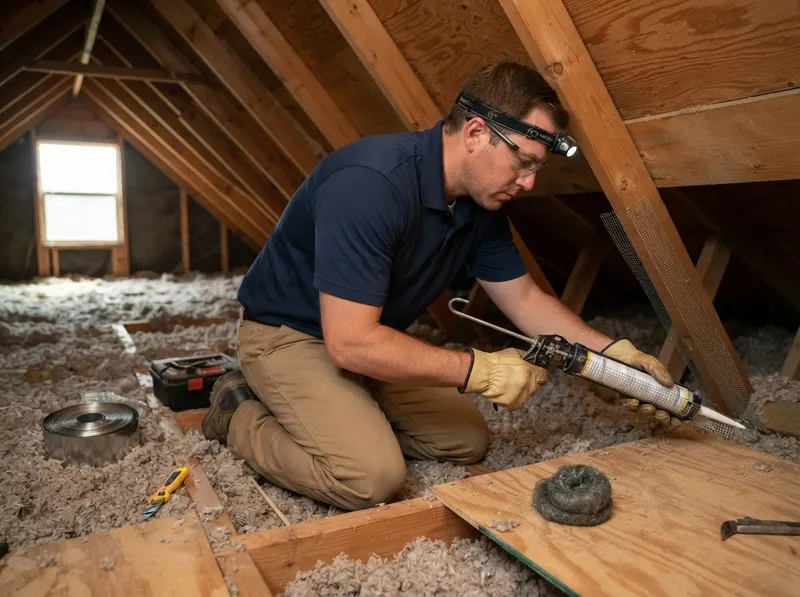
Roof rats and house mice exploit roof intersections, unsealed soffits, ridge vents, and plumbing penetrations to enter attic insulation during cooler months. Service involves installing 24-gauge heavy-duty steel hardware cloth over all exterior utility gaps, securing custom ridge vent metal guards, and installing physical galvanized sweep guards on garage doors. Technicians then construct interior mechanical snap-trap arrays placed along structural runs, joists, and thermal insulation trails to remove resident rodents without toxic rodenticide baits that cause indoor odor issues. Contaminated blown-in insulation containing feces and urine is sanitized using microbicidal foggers, restoring structural hygiene and sealing biological entry scents.
Get a quote →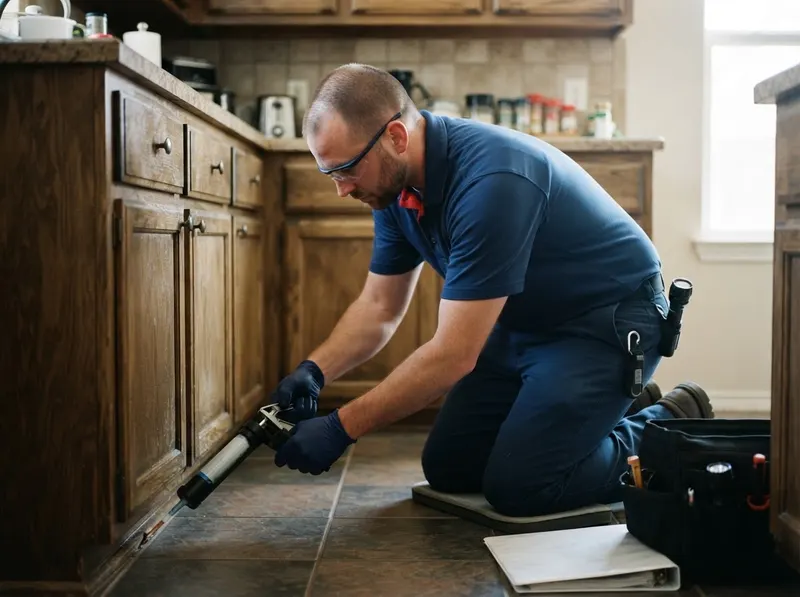
American cockroaches, smoky brown roaches, and Oriental waterbugs enter living areas through open perimeter weep holes, expansion gaps, and dry municipal sewer connections during hot summer months. Structural defense incorporates precision dust injection into internal dry wall voids around kitchen plumbing lines, bathroom drainage risers, and water heater closets. Technicians distribute insect growth regulators to interrupt reproductive egg casings and apply macro-crystalline exterior perimeter barriers along concrete slabs, landscape edges, and foundation bricks. This multi-layered intervention stops outdoor roaches from migrating into crawl spaces, floor cavities, and kitchen cabinets while eliminating hidden indoor nests without lingering odors.
Get a quote →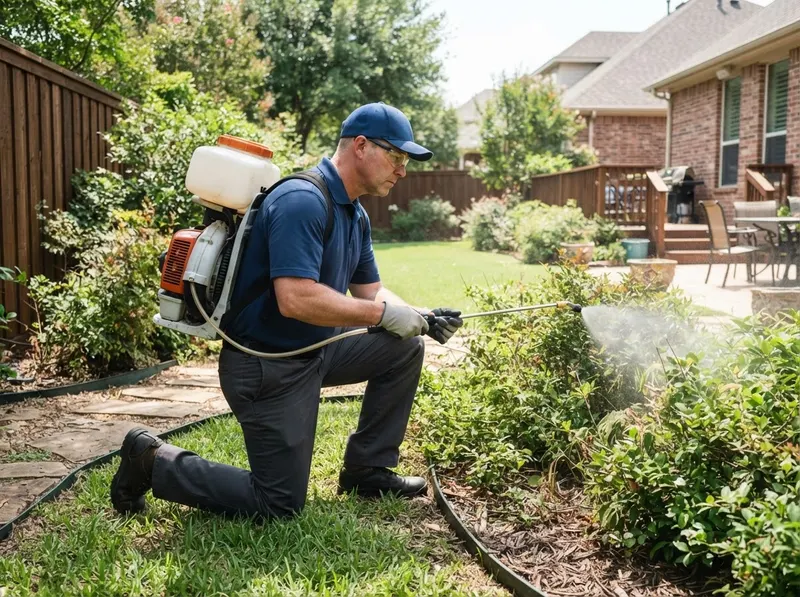
Standing water collected in low-drainage clay soils, shaded tree canopies, and storm drainage catch basins drives aggressive mosquito breeding from late spring through early autumn. Technicians apply microencapsulated adulticides to the undersides of dense foliage, ornamental shrubs, and sheltered patio overhangs where mosquitoes rest during daytime heat. Concurrently, biological larvicides containing Bacillus thuringiensis israelensis are placed in non-draining low spots, French drains, downspout extensions, and landscape catch basins. This dual-action method disrupts both aquatic larval lifecycles and adult swarming populations, dramatically lowering biting insect pressure around outdoor patios and family recreation areas.
Get a quote →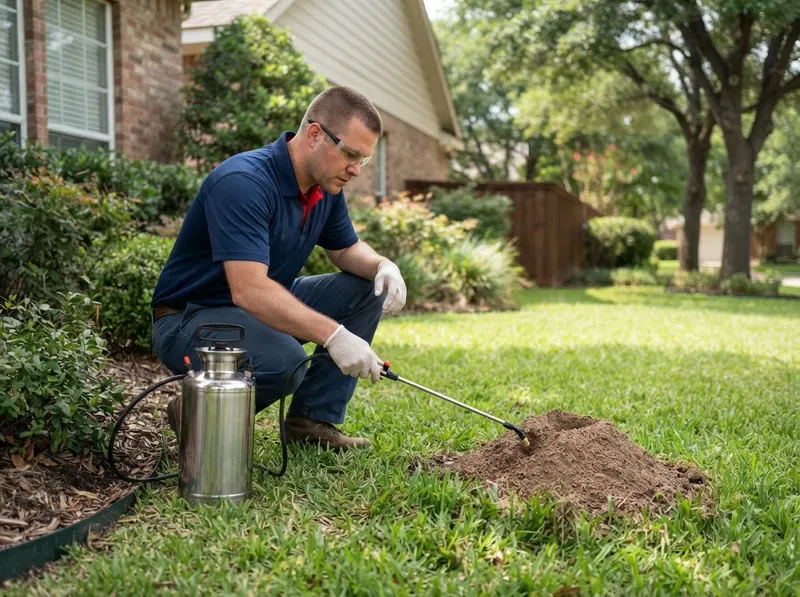
Red imported fire ants build extensive interconnected subterranean mounds throughout open Texas clay lawns, posing stinging hazards to family pets and damaging electrical HVAC contactors. Elimination utilizes low-toxicity targeted granular baits distributed uniformly across the entire lawn turf rather than single topical mound drenches that simply split the colony into multiple satellite mounds. Foraging worker ants carry the bait particles directly into underground brood chambers, feeding the active insect growth regulator to the reproductive queen. This comprehensive broadcast strategy neutralizes subterranean colonies across the yard, preventing re-infestation from adjacent properties throughout the active spring and summer seasons.
Get a quote →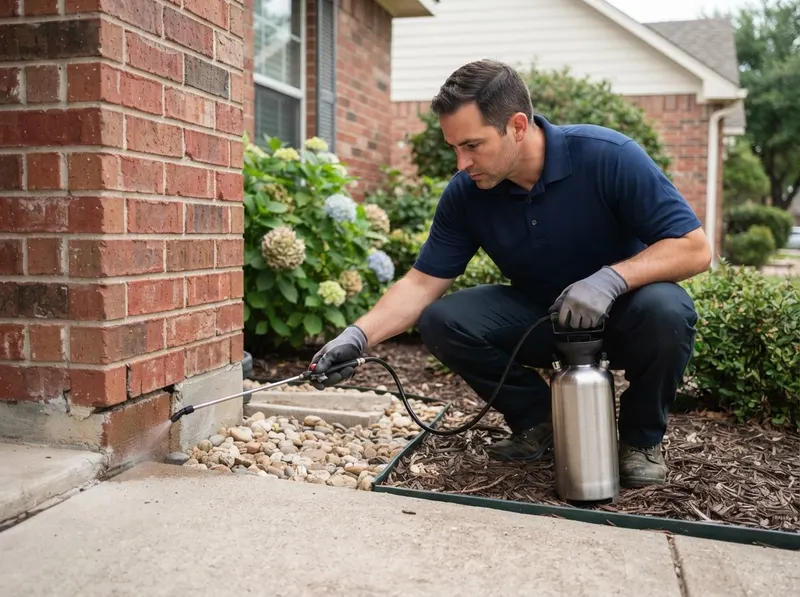
Centipedes, silverfish, earwigs, crickets, and predatory spiders seek indoor moisture when outdoor soil dries out and contracts away from concrete slabs. Exterior barrier application places a continuous treated defensive band extending three feet up the exterior foundation brickwork and six feet outward across garden beds, walkways, and mulched zones. Microencapsulated formulations bond to porous masonry substrates, resisting solar UV degradation and rain wash-off to neutralize crawling pests before they access structural thresholds. Window perimeters, exterior door jambs, and garage thresholds receive localized barrier sprays to prevent opportunistic perimeter breach points.
Get a quote →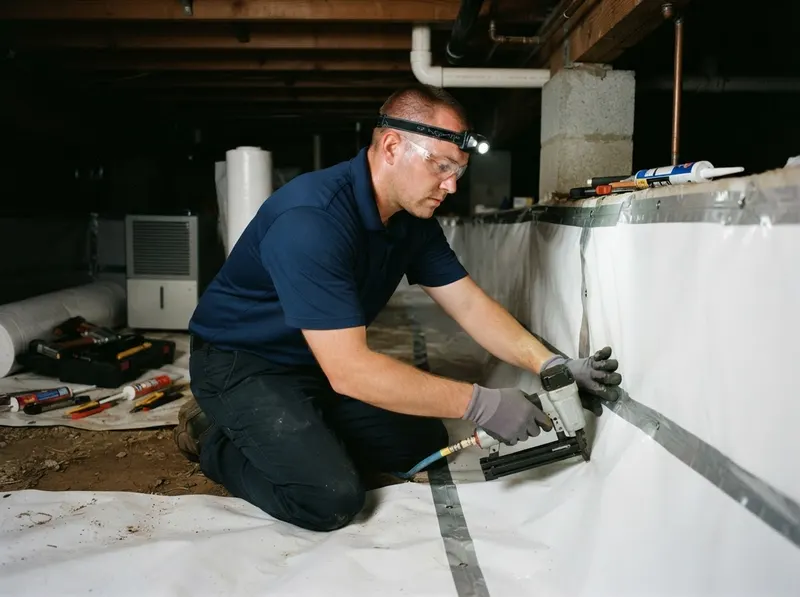
Pier-and-beam properties feature elevated ground moisture and humid subfloor environments that attract subterranean termites, wood-boring powderpost beetles, and damp-loving carpenter ants. Technicians clear fallen organic debris from the crawl space floor, treat load-bearing structural joists with penetrating borate wood preservatives, and seal grade-level ventilation access points against vermin. Installing durable vapor barrier membranes directly over bare ground reduces relative humidity beneath living spaces, eliminating the subterranean moisture accumulation that structural wood-destroying organisms require to colonize the home subflooring and framing members.
Get a quote →
Commercial food preparation facilities and restaurant kitchens face acute German cockroach, fly, and rodent pressures behind heat-generating cooking equipment and dishwashing stations. Treatment utilizes discreet non-toxic gel baits applied inside stainless steel equipment legs, structural hollow extrusions, and motor housings. Crack-and-crevice spot applications of non-repellent insecticides combined with insect growth regulators prevent reproduction, while targeted insect light traps and pheromone monitoring stations maintain health inspection standard compliance. Detailed documentation logs provide audit-ready proof of proactive sanitation, pest monitoring, and zero-residue commercial compliance.
Get a quote →You get a firm, itemized quote for your pest control service before any work begins, no surprises, no pressure.
Careful prep, tidy work, and a full cleanup when we are done. We treat your home and belongings like our own.
The same trusted, background-checked team from the first call to the final check.
If dealing with wood damage, hollowed framing, or discarded swarm wings along slab foundations, choose targeted subterranean termite barrier treatments rather than generalized broad-spectrum spraying. Subterranean termites bypass topical sprays by tunneling below grade directly into internal wall studs, meaning only liquid non-repellent termiticide barriers placed via trenching down to the footing can arrest the colony. If hearing scratching sounds above ceilings, finding chewed electrical wire insulation, or spotting gnaw marks near rooflines between October and January, select comprehensive attic rodent exclusion and mechanical trapping instead of anticoagulant chemical baits.
The trade-off is that specialized exclusion demands direct structural sealing of weep holes, fascia intersections, and roof vents using 24-gauge galvanized hardware cloth rather than temporary pesticide sprays that leave carcasses decomposing within wall voids. For seasonal mosquito and roach suppression between May and September, choose quarterly exterior liquid and granular perimeter applications. The trade-off involves prioritizing outdoor foundation defense, treating three feet up the brick and six feet out across soil, over repeated chemical applications inside living spaces, keeping indoor living environments free of unnecessary airborne chemical residues while creating an impenetrable continuous barrier against invasive warm-weather pests.
Every project gets a firm, written price after a free on-site visit. Ranges below for orientation.
Tell us about your pest control service job and we'll send a clear, written quote, usually the same day. Or just call and talk to a real Arlington pro.
(682) 423-0546
Properties located along Lake Arlington, Rush Creek, Village Creek, and the extensive Trinity River drainage corridor within River Legacy Parks face distinct biological pest pressures driven by expansive Tarrant County alluvial clays. The soil shifts dramatically between wet spring months and severe triple-digit summer heat, creating wide ground fissures and foundation movement that break exterior pesticide barriers and open structural entry cracks. In master-planned developments like Viridian, the proximity to protected wetlands and riverside marshlands leads to relentless seasonal mosquito swarms and mid-summer midge migrations that require biological water treatments. Older, established neighborhoods such as Dalworthington Gardens, Pantego, Interlochen, and Shady Valley feature dense canopies of mature live oaks, pecans, and post oaks whose branches hang directly over roof structures, forming natural access pathways for roof rats searching for attic access points. Furthermore, expansive brick veneer homes throughout Southeast Arlington and Fannin Farm feature open ground-level weep holes that allow American cockroaches, scorpions, and field mice to pass straight through exterior walls into wall cavities. Pier-and-beam properties situated in the Heart of Arlington and surrounding the University of Texas at Arlington campus face heightened dampness within crawl spaces, creating ideal nesting grounds for subterranean termite colonies and wood-destroying beetles that demand structural moisture mitigation alongside liquid termiticide barriers.
Free estimates for Arlington & the surrounding area.
 Longhorn Pest Control